Weekly Link Roundup #74
Sometimes you just have to send it....

Microsoft launches ‘vibe working’ in Excel and Word: I do think Excel is probably the most powerful and least understood pieces of software in the world so anything that makes its powers more accessible is a net positive, although this still gets me “Microsoft says its Agent Mode in Excel has an accuracy rate of 57.2 percent in SpreadsheetBench, a benchmark for evaluating an AI model’s ability to edit real world spreadsheets.” That number needs to go way up. This same AI helper in Word - “Agent Mode in Word goes beyond the existing writing, rewrite, and summarization AI features in Word. “Agent Mode in Word turns document creation into vibe writing, an interactive, conversational experience,” Chauhan says.” Worries me. I think the danger here is that if everyone in the org is using the same AI writing assistant, then you run the real risk of just create homogenous content but at scale. Where do all the unique voices go?
Richard Sutton – Father of RL thinks LLMs are a dead end: First, when someone like Sutton speaks, someone who has a deep, root/kernel level understanding of how this umbrella term “AI” actually works, its important to listen. Second, when he holds this position “Richard Sutton is the father of reinforcement learning, winner of the 2024 Turing Award, and author of The Bitter Lesson. And he thinks LLMs are a dead end. After interviewing him, my steel man of Richard’s position is this: LLMs aren’t capable of learning on-the-job, so no matter how much we scale, we’ll need some new architecture to enable continual learning. And once we have it, we won’t need a special training phase — the agent will just learn on-the-fly, like all humans, and indeed, like all animals. This new paradigm will render our current approach with LLMs obsolete” - then its important to at least listen to the interview. Third, this drives home the point that developing a sound strategy and re-thinking how your org works, is way more important than which specific tech you go with.
How AI and Wikipedia have sent vulnerable languages into a doom spiral: Forget AGI…I worry about the destruction of languages. Languages are primary transmitters of cultures and AI, well this passage nails it “The problem with them nowadays is that they are armed with Google Translate,” Trosterud says, adding that this is allowing them to produce much longer and more plausible-looking content than they ever could before: “Earlier they were armed only with dictionaries.” This has effectively industrialized the acts of destruction—which affect vulnerable languages most, since AI translations are typically far less reliable for them. There can be lots of different reasons for this, but a meaningful part of the issue is the relatively small amount of source text that is available online.”
Colleges And Schools Must Block And Ban Agentic AI Browsers Now. Here’s Why: I just love that the reaction to the rise of AI-driven browsers (browsers like Comet from Perplexity), that can perform actions on your behalf like clicking the Next button or completing a quiz, is BLOCK THEM! That’s the epitome of closing the barn door after the horse gets out. The article’s author posts stories like this “One professor watched as an agent logged into Canvas, graded multiple assignments, and posted written feedback under their name—without being asked to write feedback at all. Another reported the tool bypassing Duo two-factor authentication, entering a restricted site even though the human user had to manually approve access on their phone” to demonstrate the urgent need to block these monsters. Now look, we do need to take action - 100% right. But if our first reaction is to say block the tech instead of taking a hard look at how we’ve allowed a system that can be so easily fooled by an AI-enabled browser to pass as education (or corporate training) is to start in exactly the wrong place. We don’t need to fix this system. We need a new one.
OpenAI launches ChatGPT Pulse to proactively write you morning briefs: This one reminds me of the danger to languages story I posted. I don’t want this > > “OpenAI is launching a new feature inside of ChatGPT called Pulse, which generates personalized reports for users while they sleep. Pulse offers users five to 10 briefs that can get them up to speed on their day and is aimed at encouraging users to check ChatGPT first thing in the morning — much like they would check social media or a news app.” > > To me that just seems to be creating an information echo chamber at scale and speed. In another life I was on an innovation team. We thought we could write some code (this was pre-ChatGPT) to scan the USPTO database for certain terms. Then we thought that would only get us the same results that everyone else is looking for. So we thought, why don’t we write the code to go in and look in each patent for the word pairings that were used the LEAST frequently, so something like honey-producing and robots? Pairings that would be outliers, like serious outliers. I would want an AI feed to see what I’m looking at and chatting with it about and make orthogonal connections to sources and stories…point me to to the adjacent possible. I already get my news, I want surprises. I’m curious not under-informed. > > See also: Former NotebookLM devs’ new app, Huxe, taps audio to help you with news and research - I actually like this one a lot more than Pulse - at least in theory. “What’s different here is that Huxe lets users build a “live station” of any topic, like tech news, sports, or even celebrity gossip. After you listen to a station, the app will give you updates by tapping different sources — helpful for following developing news. There’s also a personalized interest feed, which automatically generates audio content that might interest you.”
The Future of Learning Isn’t Memorization—It’s Mastery: Love this. Its almost like they’re saying you need to be relentlessly curious and deeply engaged <insert shameless self promotion here> “In a world where AI can deliver information faster and more accurately than any human, what matters most are the uniquely human skills of critical thinking, communication, creativity, collaboration, and character. This is why we need to replace our outdated, time-based education model with a mastery-based approach. The future of learning depends on a ground-up redesign of our standards, metrics, and methods in the classroom.”
The future of universities (Special issue of Nature): “Yet, in all this, universities remains a hotbed of innovation — and a source of huge expertise, knowledge and value for wider society. This Nature special examines all the pressures higher education is under — and, drawing on examples from across the world, asks how the sector can and must adapt to survive. It includes selected articles from journalists as well as editorials and comment from Nature, including subscriber-only content. This site will be updated with more content as it is published.” > > See also: How Micro-Credentials Are Shaping The Future Of AI-Driven Learners.
The future of the CLO: Leading in a world of merged work and learning: To be fair, this isn’t new - you can just ask Bob Mosher about learning in the flow of work but its good that its getting high cover - “The future of learning isn’t about adding more training on top of work; it’s about reimagining work itself as inherently developmental. In this new paradigm, learning is no longer a “go away and do it” activity; rather, it is a seamless, integrated part of the work experience. Work and development are merged, and daily activities are the most important catalyst for professional growth.”
The $31.5 Billion Problem L&D Isn’t Talking About: He’s not wrong and we’ve never been more able to fix the issues - “When your company’s best team lead gave notice, did you schedule an exit interview to ask more than just the standard exit questions? If the answer to that question is, “no”, you may have missed a golden opportunity to have them show you how they actually do their job.” > > Love Mark’s pragmatic approach and actually recommending solutions to try out. Great read.
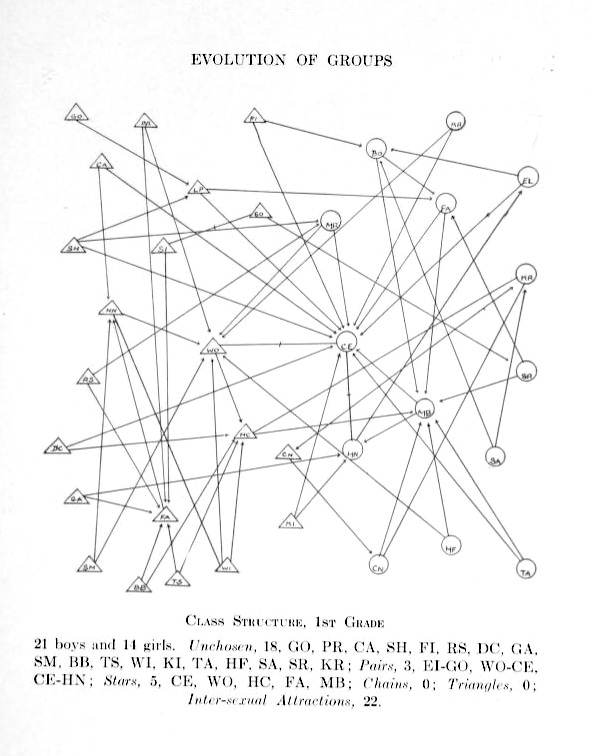
Why are human networks important? (a 3-part series by Valdis Krebs and Rīga Stradiņš University): Clifford Geertz, in The Interpretation of Cultures, stated that “Believing, with Max Weber, that man is an animal suspended in webs of significance he himself has spun, I take culture to be those webs...” Valdis Krebs has made a life and career out of helping people and orgs map those webs. For the absolute life of me and with all the talk around “social learning", I cannot fathom why so few in the learning field have picked up anything to do with #SocialNetworkAnalysis or #OrganizationalNetworkAnalysis. I mean the only benefit is actually finding out the reality of how your org works. Read this whole series.