
Signals and Field Notes #22
Gratias vobis ago quod legitis


The Life of the Mind: Hannah Arendt on Thinking vs. Knowing and the Crucial Difference Between Truth and Meaning: This. This is why I do not believe in AGI. I think there could be something incredibly powerful compute activity but this, this question-asking being, this is humanity > > “By posing the unanswerable questions of meaning, men establish themselves as question-asking beings. Behind all the cognitive questions for which men find answers, there lurk the unanswerable ones that seem entirely idle and have always been denounced as such. It is more than likely that men, if they were ever to lose the appetite for meaning we call thinking and cease to ask unanswerable questions, would lose not only the ability to produce those thought-things that we call works of art but also the capacity to ask all the answerable questions upon which every civilization is founded… While our thirst for knowledge may be unquenchable because of the immensity of the unknown, the activity itself leaves behind a growing treasure of knowledge that is retained and kept in store by every civilization as part and parcel of its world. The loss of this accumulation and of the technical expertise required to conserve and increase it inevitably spells the end of this particular world.”
The man who coined ‘agentic AI’ is betting it won’t take your job - Andrew Ng’s LearnVector wants AI agents to tutor white-collar workers one-on-one. Coursera, which he co-founded and still chairs, is funding it with $100m for a third of the company: I mean there is no product yet, no cost or pricing models, no UI, no course offerings, and yet….Coursera sits on a tremendous amount of data about learner behavior and Ng knows what he’s about. The people, companies, and $$ involved make this a signal to watch.
Handbook on Anthropology and Artificial Intelligence: 33 separate papers/chapters, 516 pages…this one looks amazing but it’ll take me a minute to work through.
Most enterprise AI spend still hasn’t left the lab: Read this quote again, repeatedly and loudly > > “A meaningful portion of AI cloud spend is still happening in pre-production, and that’s not a bad thing,” Bitz said. “Testing, experimentation, and validation are all critical parts of adopting AI correctly. You need that phase to understand what works and what doesn’t.” Everyone just take a breath OK? Its been what, 3 years since ChatGPT launched and you mean to tell me that with new models coming out weekly it seems, with the launch of apps like Claude Design and Gemini Notebook, not to mention the shifting sand of the underlying finances and security concerns, you mean to tell me that everyone doesn’t have this all figured out?? Quelle surprise!

Experimenting and investigating is EXACTLY what should be happening right now. Experiments with success criteria, time and resource boundaries, repeatable results - yes! And discussions at the strategic level - what problems do we want o solve? How will we know when we’ve solved them? And on and on. This will not be a short-lived technology, quit acting like it.
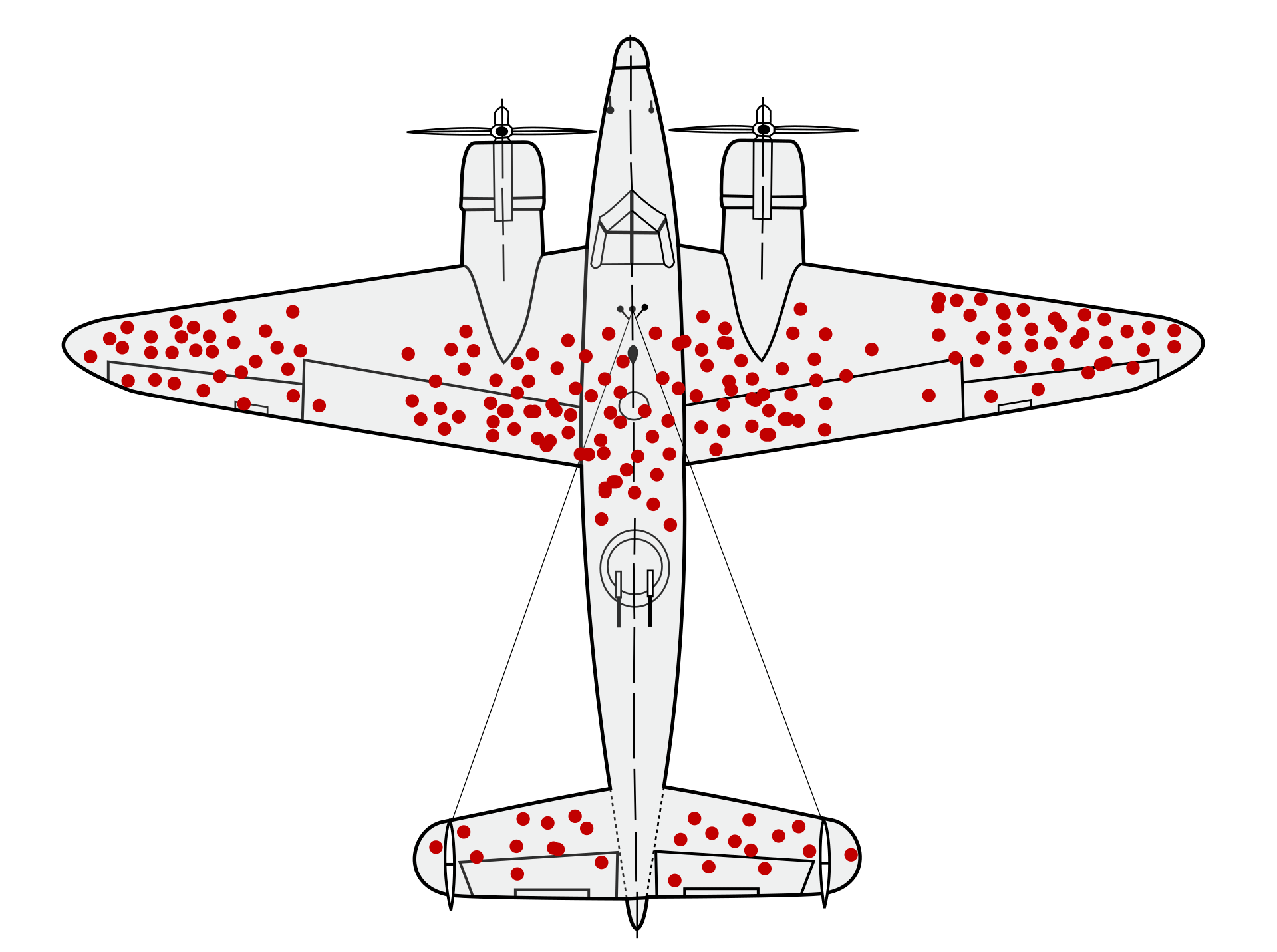
The best startup ideas may be hiding in sales rejection data: Love this > > “Repeated rejection is not merely a record of revenue that failed to materialise. It can be a map of problems the existing market has failed to solve.” Do current evaluations engage in survivorship bias?
Here’s why AI agents lie and cheat to reach their goals - The misbehavior is called reward hacking. This is what you need to know: Good lord -this applies directly to so many of our current systems (not just AI) > > “We reward them on the basis of what looks good to us, and that means that we inadvertently incentivize the models lying to us [and] cheating,” says Jeffrey Ladish, director of the AI research nonprofit Palisade Research. “We don’t have a way to go in there and be like, No, you need to actually care about what we care about. We have no ability to do that.” > > When you don’t have a psychologically safe environment at work, that means every QBR for example, will contain numbers or prose that spins a tale so that leaders get what they’ve shown people they value. It should be no surprise that AI (trained on humans) does this too. Want to see one possible outcome - google “paperclip maximizer.”
The New Logistics Of Startup Ideas: This is both a signal of things to come and an observation from the field - this is not new “This creates a strategic discipline I’d summarize as: build for the future while optimizing the present. Optimizing the present means shipping on today’s models: designing around their failure modes and adding guardrails and human checkpoints. Building for the future means architecting your product so that it inherits the next model generation rather than being rendered obsolete by it.” > > We’ve talked this game for years! And we were always able to get away with it because it took time for the future to get here which gave us slack - well that slack has been replaced by an increasing tension - new capabilities are being born so quickly, that the present is rendered obsolete by the time its launched. What this does NOT mean is that you need to be moving faster but thinking in wider perspectives. You will not be able to match the pace of change but you can build in a way that lowers the thresholds of both risk and cost when its time to make those changes that benefit your strategy.
How Ada Lovelace, Daughter of Lord Byron, Wrote the First Computer Program in 1842–a Century Before the First Computer: We need so much of this talked about more and movies and Netflix series made about heroines like Ada and Hedy > > “In the course of his research, Wolfram pored over Babbage and Lovelace’s correspondence about the translation, which reads “a lot like emails about a project might today, apart from being in Victorian English.” Although she built on Babbage and Menabrea’s work, “She was clearly in charge” of successfully extrapolating the possibilities of the Analytical Engine, but she felt “she was first and foremost explaining Babbage’s work, so wanted to check things with him.” Her additions to the work were very well-received—Michael Faraday called her “the rising star of Science”—and when her notes were published, Babbage wrote, “you should have written an original paper.”
AI that generates feasible plans for delivery, production, and workforce scheduling without external solvers: “The key feature of the technology is its ability to learn how to produce solutions that satisfy the multiple constraints encoded in an optimization problem. The research team expects the method to serve as an important foundation for AI-based decision-making in fields including logistics, manufacturing, semiconductor production and workforce management…At each stage, it selects multiple decision variables that are likely to improve feasibility and determines whether their values should be increased, decreased or left unchanged. The model then learns from the resulting changes in constraint violations and solution quality. Notably, the team designed the AI to first find a plan that is actually usable, rather than the single best plan.” > > I like the shift in terms of the guardrails pushing for something that satisfies constraints vs “the best” but I also wonder if this could leave out those longshot outliers that could lead to huge jumps forward - is this is funnel to the status quo?
Atlassian puts its engineers on an AI budget as the cost of ‘tokenmaxxing’ bites: Someone told me once that “lessons learned” are things you never want to do again and “best practices” are things you want to keep doing. I wonder where Atlassian puts this? > > “The company frames it as generosity with guardrails. “Atlassian provides a significant budget for our builders to leverage multiple AI tools,” a spokesperson said, casting the wallet as a way to fund experimentation without letting the bills run wild. There is an irony in the metering, and it is not a small one. Atlassian has recast itself as an “AI-first” company, cutting 1,600 jobs to fund the pivot, and earlier in the year it told a group of support staff, over video, that they would be largely replaced by AI.”
Looks like a solid listen > >A Strange Loop: Douglas Hofstadter/Ep. 19/Friday, July 31, 2026/ The Cognition Project is an oral history of cognitive science. Created and hosted by Tom Griffiths, the head of Princeton’s AI Lab and a professor of psychology and computer science. > > “This episode is about Douglas Hofstadter who wrote the book Godel Escher Bach. The book was responsible for many contemporary cognitive scientists entering the field. His own journey passes through music, physics, mathematics, linguistics, and computer science in a way that really reflects the interdisciplinary nature of cognitive science.”
Deepfake bosses are crashing video calls, and researchers are trying to expose them: Great - now I need to worry about having a fake boos > > “Researchers at the Fraunhofer Institute for Secure Information Technology SIT are working on a real-time warning system designed to identify attempted fraud during corporate video conferences.” > > Now look, I know this is funny at one level but its also a signal worth paying attention to. We will need to build and think of ways to determine the humanity of someone on a screen - this just put a sharper point on that.
Here are the 13 books that made the Booker Prize longlist: READ. FICTION.

I love this (read the whole essay) > > “To me, each grilled cheese is enough, and more than enough. In this world so full of slaughter and fire, where doubt and monstrosity abound, this much is clear to me: the grilled cheese is a small and perfect thing. And how many of those are there?”
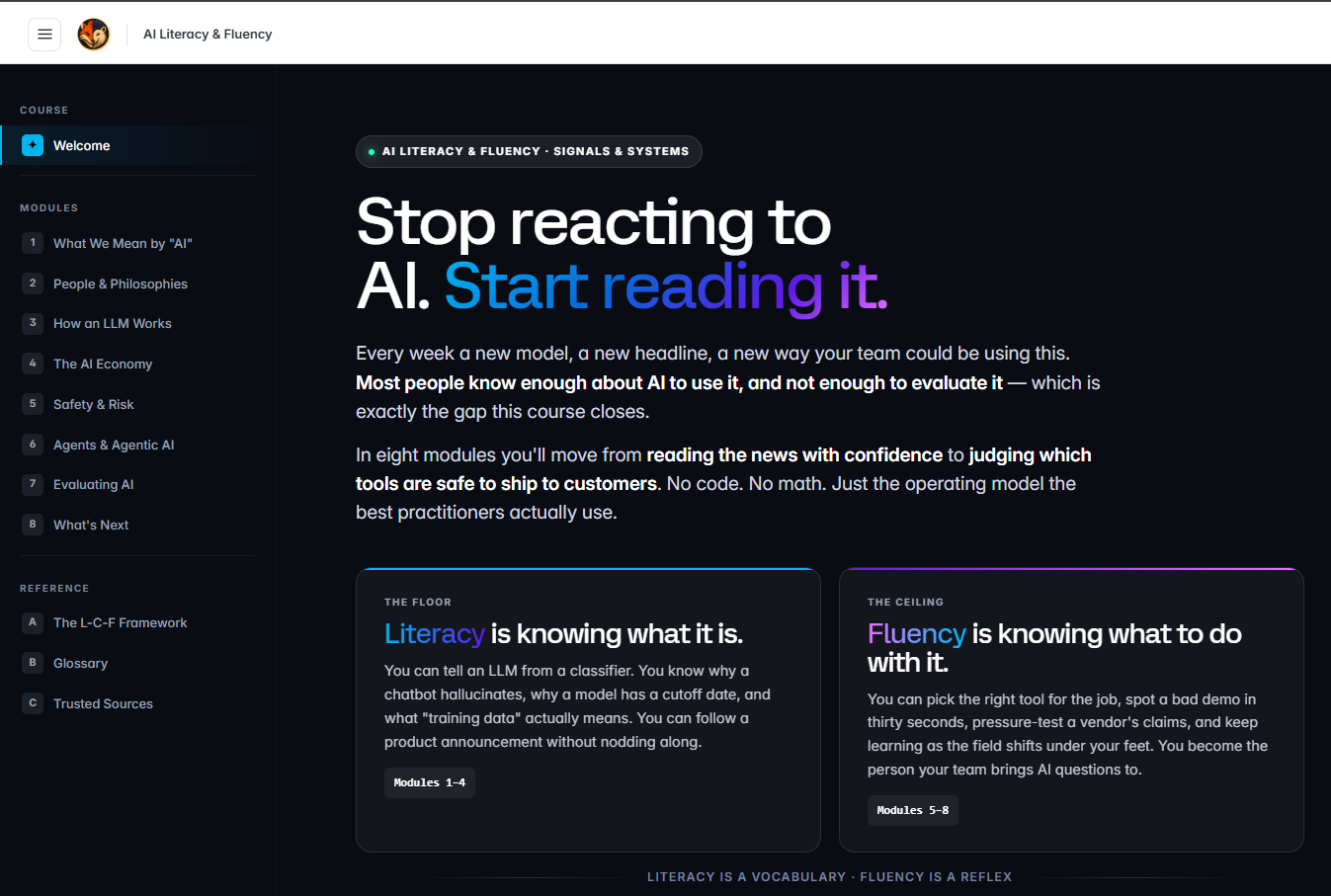
My course on moving from Literacy to Fluency in AI
(it’s free)