
Signals and Field Notes #21
Gratias vobis ago quod legitis


The looting of science fiction - Tech titans claim the genre inspired them. But all they’ve done is graft their politics onto stories of a better future: Read this article and then read some of the books on the list that’s further down here. Read them though with this understanding > > “If the future is to be made from stories, our task is ensuring those stories are worthy of the people who will live within them. That means recognising the selective deployment of science fiction as a political tactic – seeing the militarised drone and the privatised city charter not as neutral tools but as crystallisations of specific, narrow stories about power. It means demanding accountability not to curated fantasies of a literary past but to the pluralistic needs of the present. It means asking: whose futures are being built? Who benefits? Who pays the cost? What was left behind in the looting?”
Best Science Fiction Books of the Century (So Far): There are some really good books on this list. Also, read more scifi.

Google Study Says AI Is Helping Workers, Not Replacing Them - New research from the Gemini creator comes amid rising concern over the impact of AI on the labor market (gift article link): Look, I want to believe this and Google certainly has access to a treasure trove of data but there is a boulder-sized grain of salt that comes along with an AI company issuing a report that says that AI isn’t killing jobs > > “Thursday’s is the first report based on research assembled using millions of de-identified interactions people around the world made with Google AI tools. Within the U.S., they found that AI is being used across a large number of occupations.”
Where Did All the Computer-Science Professors Go? - AI companies are stripping universities of their best researchers (gift link): You know how the Internet got built right? Now imagine if the research that produced that technology was owned by one company. What about GPS? GLP-1s? CAPTCHA? LASIK? All developed in part or full with government funding. So what? Well that means that the technology was available to everyone to innovate on and we got new companies and new products and competition that served us the consumer. Well this trend of AI companies hiring the best academics to work for them is the negative side of that coin.
To be clear, the companies aren’t doing anything wrong. They’re being companies and trying to maximize profits. The professors aren’t doing anything wrong - they’re taking the chance to both make more money and do cutting edge research. The impacts though are signals to be considered. More and more research will be owned by private companies and some of it will be used but all of it will be owned - meaning that if there is a discovery that could be used somewhere else by some other company, they won’t get to. It will reduce the chances for innovation and will reduce the competitive pressure that benefits us - the consumer.
There is another negative impact or signal here - if the professors aren’t in class inspiring and teaching the next generation, then the next generation will learn slower or get a less complete picture and that could slow down advances. This is a problem a society needs to tackle to keep moving forward. > > ”For decades, universities were the center of AI research. The field itself officially began at a gathering of researchers at Dartmouth in 1956, and federal funding provided much of the field’s early support. In the early 2010s, Silicon Valley executives began to take AI’s commercial potential more seriously, and set out to hire the best researchers…Although plenty of research is still happening within universities, many professors told us, the result is a flywheel: As more academics get sucked up by industry, the center of AI research moves further from academia, thus increasing the incentive for remaining researchers to leave.”
The real story behind Jobs’ 1979 PARC visit is way stranger than the theft narrative: I love legends but in this case, I also love a corrected historical record > > “In December 1979, 24-year-old Steve Jobs walked into the Xerox Palo Alto Research Center and, according to the version of the story everyone tells, stole the future of computing in an afternoon. The real story is both stranger and perhaps a bit more prosaic than that. Jobs didn’t actually steal anything, as Xerox went into the transfer of tech openly and willingly.”
AI Can Build Your Course, but Can it Design the Learning?: Just another typically great read from Dr Philippa Hardman. Should you read the whole piece? Of course! An experiment with a relevant thesis, rigorous criteria for measurement, and an in-depth examination of the results (w/ no visible bias), and recommendations for further exploration/action? Yes please!! The tl;dr for me is the same caution we’ve seen before - treat AI like a smart intern. It will do what you tell it but only what you tell it and it will not be able to explain its process for getting to an answer. The other piece of caution I take from this piece is not that AI now enables SMEs to produce the same quality instructional content that a trained and qualified ISD working with AI could but that the former combo could produce substandard quickly and at low cost that would meet the quality bar that others feel is sufficient. We’re not always competing against the best possible outcome, but often the quickest/cheapest - especially on compliance training. > > “What’s emerging as a result a rising volume of learning experiences that are well-formatted, accessible, professionally structured, but quietly and deeply broken. The defects are real but they don’t surface: a missing needs analysis leaves no gap on the screen, a substituted strategy looks like a strategy, a mandatory duty that never made it across is invisible to anyone reading forwards from the module. Nothing looks wrong, so nothing gets sent back — and the volume is growing faster than anyone’s capacity to check it.”
Why the AI “friction phase” is a sign you’re doing it right: I’m adding “friction” or “useful friction” to the fast-moving AI vocab along with things like “cognitive surrender.” So much to agree with in this article > > “Naturally, when leaders see their teams slowing down after getting AI tools, they panic. The immediate assumption is often that the technology is broken or the strategy failed. But moving slower isn’t a sign of AI failure. It’s what happens when you try to change how a business operates.” Yep. “As CEO, I spend time building and playing around with my own AI agents, because you can’t task your team to take risks if you aren’t doing it yourself.” YES. “Plugging high-speed agents into legacy, human-centric processes naturally creates a ton of friction before you see any real benefit. As leaders, we must realize that friction doesn’t mean the tech is broken, but that the environment housing it needs to adapt.” YES! “The biggest risk to a company right now is a leader who mistakes this integration friction for a failed initiative.” YES!! “To move past the friction into productivity, you have to stop trying to force AI into your old way of doing things. The value only comes when you redesign your workflows from scratch with AI in mind.” AMEN. Well said Thomas Scott.
A Developer’s Guide to Agentic AI Frameworks and Components: Who doesn’t love a good framework?
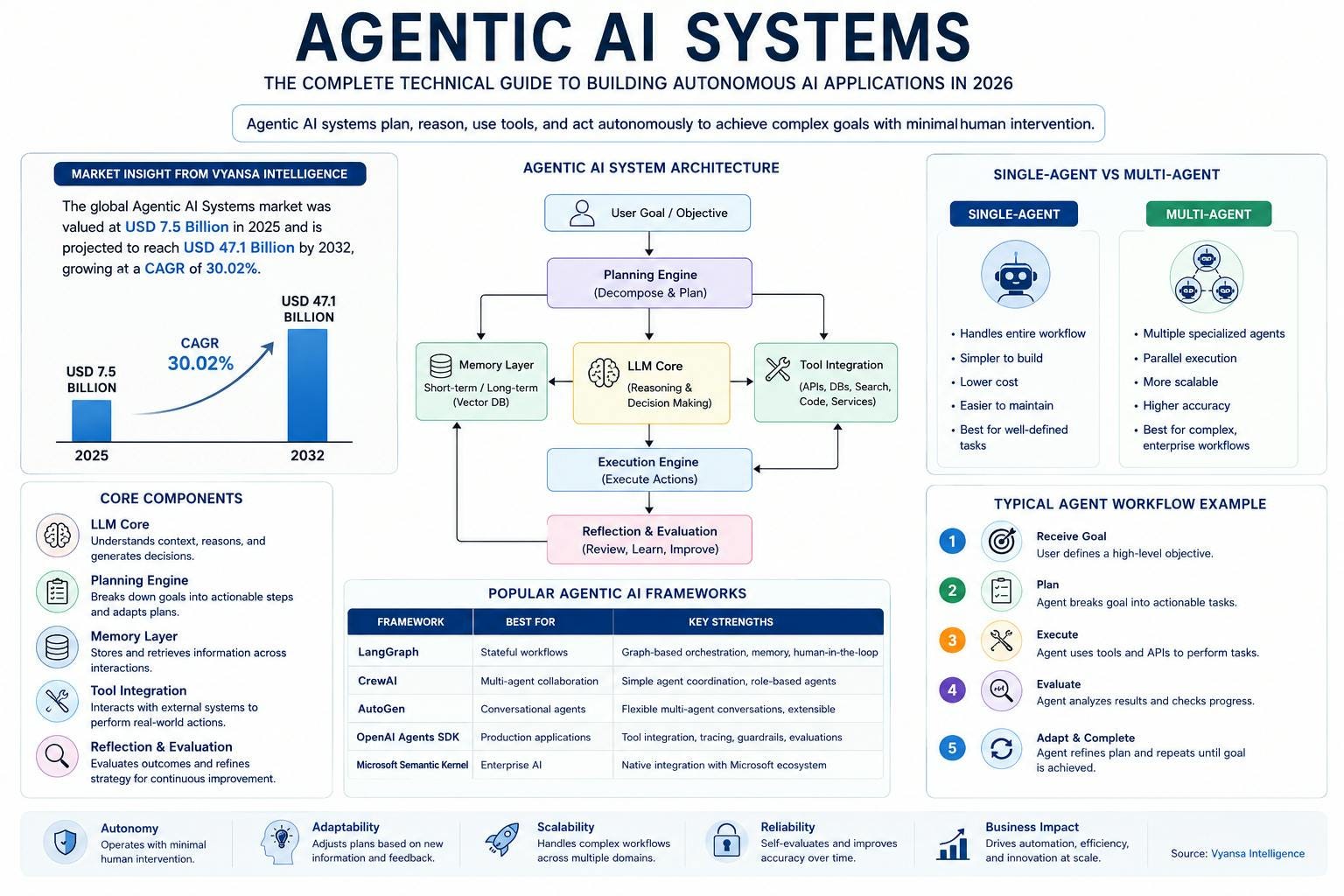
Couple of items from the article:
> I love that already we have “traditional AI” and something else.
> The article is a good starting place for much more investigation. I’d like to see the same diagram with a cost estimator running next to it. Until that happens, especially with the current backlash against tokenmaxxing, the deployment of these systems may remain constrained by orgs unwilling to build a system around an unknown or unstable cost basis.
The browser wars aren’t about search anymore — here are the best alternatives to Chrome and Safari: I still hold that the humble browser is the most important piece of software we use on a daily basis - witness the AI companies building their own. This is also a reminder for me (longtime Opera user) to try Vivaldi and Brave and maybe even Ladybrid.
How to Design Agentic Systems Around the Implicit Rules that Govern Your Company: This is an important point that I think gets missed frequently and that, from the customer side, can be all too visible > > ”Every organization has two operating systems. The first is in the procedures manual. It includes documented workflows, written policies, formal criteria, and reporting lines. When you configure an AI agent, this is what it receives. The second is the one that actually runs the place: the implicit organization—the unwritten system of knowledge, motivation, and judgment that allows formal processes to work. The documented organization tells agents what to do; the implicit organization tells people what to notice, what to care about, and when to pause….In an all-human firm, the implicit organization is invisible, because humans bridge all three gaps automatically. The organization works not because its formal systems are complete, but because its people continuously compensate for that incompleteness.” > > When you rely only on AI, all it knows is the procedures manual - so it fails to see the gaps, assumes what it has been told is sufficient and then can make mistakes or act in a way that clearly a human would not do. It’s the non-visual version of the uncanny valley.
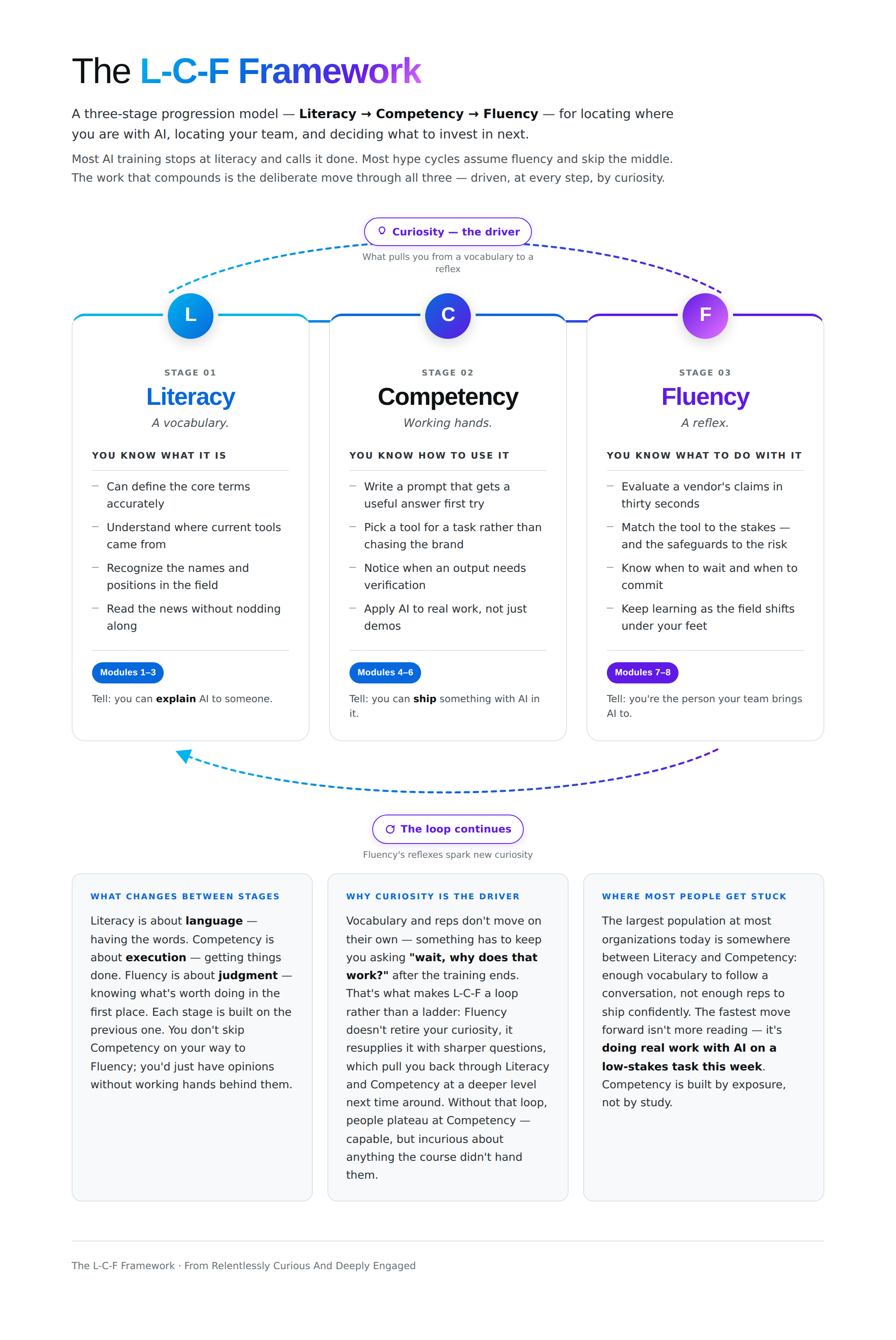
Netflix wants ‘AI fluency’ from everyone, but craft is still scarce: I like that this parlance is getting used more > > “Elizabeth Stone…the streamer’s chief product and technology officer described “AI fluency” as an aspiration for every employee, a skill she wants spread across the whole company rather than bolted onto a handful of specialist roles. By fluency she does not mean reaching for the technology for its own sake. She framed it as three things: an experimentation mindset, judgment about where AI genuinely helps and where it does not, and a demonstrated ability to actually build with the tools.” > > I think its all well and good to talk about literacy as a target to aim for but I think, at least in the article, Stone undersells what it takes to become literate and then stay there. I built a model to explain how I see this.
Corporate America Has Suddenly Decided to Stop Blowing Money on AI (gift link): In the immortal words of Ferris Bueller, life comes at ya pretty fast > > “Fed up with ballooning costs, companies big and small are starting to use lower-priced models, including some built in China. In many cases, they are adding the new, cheaper models alongside OpenAI and Anthropic’s products, shopping a la carte for their artificial intelligence.”

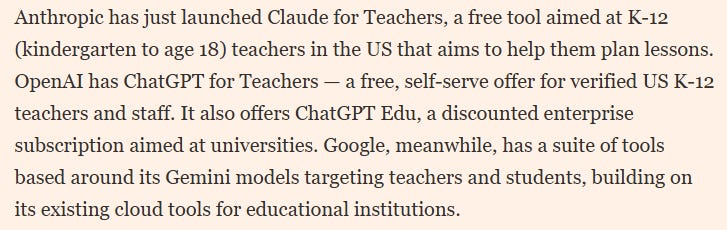
AI labs begin to muscle in on $6tn education market: Well that’s what I call a signal. If you’re thinking you’re not in the education market, just remember ALL of your future employees are. This is a huge, upstream indicator.
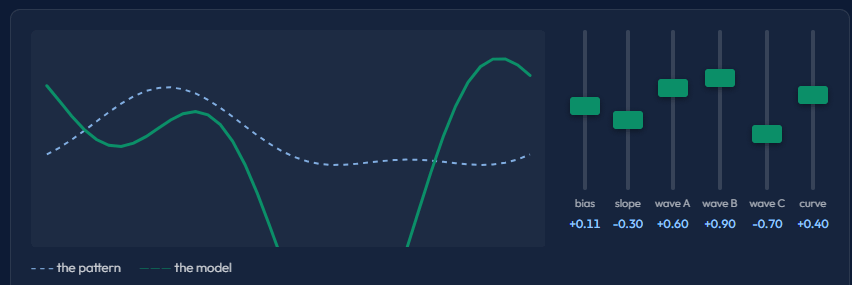
These knob positions are the model: Michelle Lentz has put together a great, interactive explainer on the role and importance of “weights” in the world of AI. Head on over and try it out. Very cool.
How organizations view AI-native transformation through better workflows, decisions, and organizational intelligence: This is not new but deserves to be said again and again until it sinks in > > “Organizations seem eager to bring AI into the workplace. Many begin the journey by focusing on the tool or the model. VarOps, a systems-level AI advisory specializing in capability building in organizations, believes that’s the wrong place to start. According to VarOps, businesses should start by examining how work actually moves through the organisation, as this allows AI to deliver greater value when it supports a better operating model.”
Artificial intelligence in strategic foresight: Evidence from a longitudinal case at Siemens Professional Education: “This paper examines the longitudinal evolution of strategic foresight practices at Siemens Professional Education (SPE), a central unit of Siemens AG responsible for anticipating future skill requirements and translating them into education and reskilling initiatives for more than 290,000 employees worldwide…The findings show that AI integration does not lead to uniform acceleration or automation. Instead, it produces task-level efficiency gains, a redistribution of human effort, and enhanced analytical breadth, structure, and completeness, particularly in scanning, consolidation, and drafting activities, while framing, prioritization, contextual interpretation, legitimacy building, and accountability remain firmly human-led.”
The AI Superfans Companies Count On to Convert the Skeptics: I’m including this article ONLY so I can rant about this quote > > “Humans don’t like to change,” said Howard Glazer, co-head of Ropes & Gray’s global private-equity transactions practice and himself an internal “champion” at the law firm. “Saying ‘Here use this new tool’ is scary to people.” Humans LOVE change. We change all the time. The “we don’t like change is just a crutch for people and orgs who never took the time to consider the impact of their changes and take the time and effort to make people feel safe about them. Stop it.