
Signals and Field Notes #19
Learning and Innovation Observed....Gratias vobis ago quod legitis

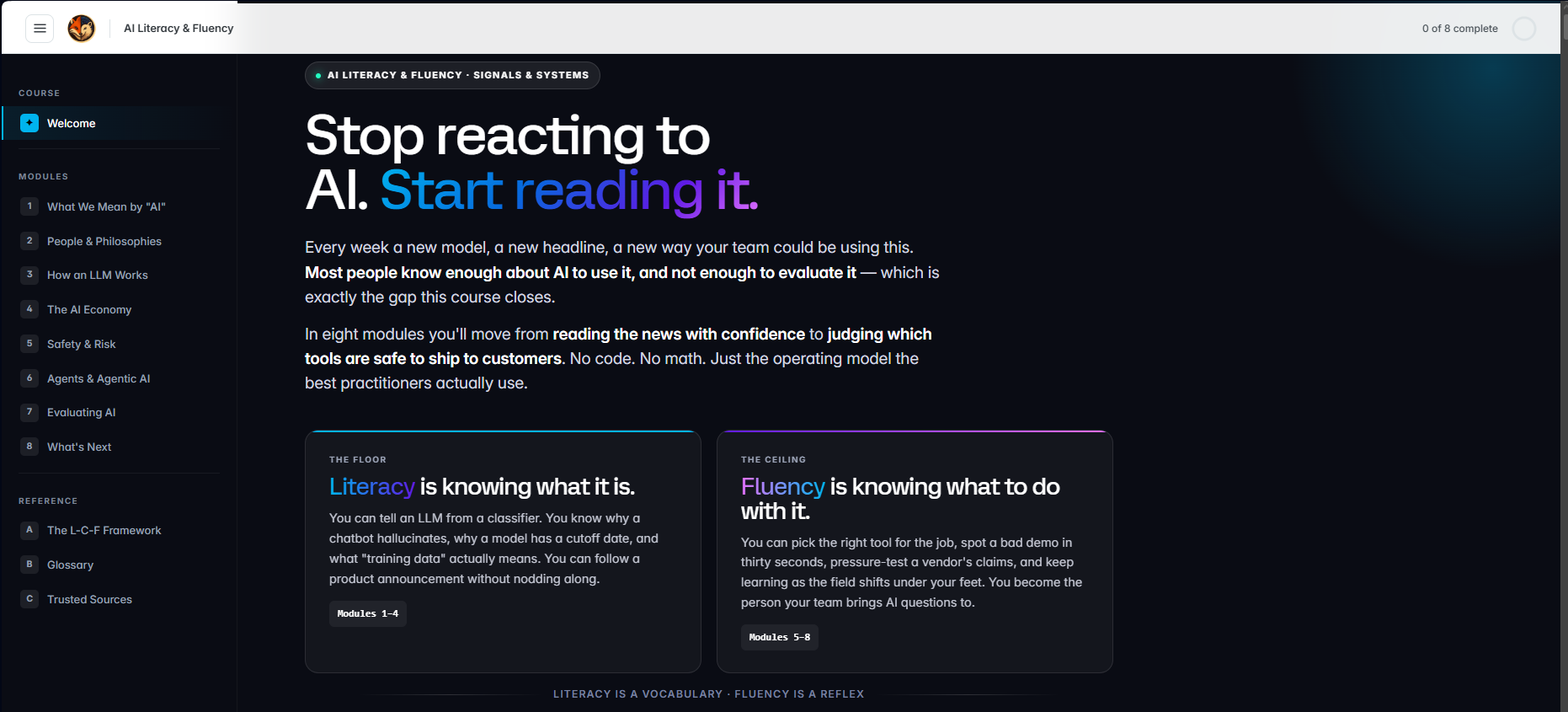
My free course on moving from AI literacy to fluency. Would love to get your feedback on it.
‘Suppressed talents’: How the workplace is still failing neurodivergent workers: Want to unlock a 20% jump in your org’s productivity? Figure out how to manage neurodivergent people, starting with your newest employees > > “EY found that 18% of neurodivergent respondents qualified as “suppressed talents”: meaning they’re highly skilled, but unable to fulfill their potential because of structural workplace mismatches, not personal shortcomings. Employees hired into certain tech roles through JPMorgan Chase’s neurodiversity program are 90% to 140% more productive than employees who had been there for up to a decade…to instigate tangible change, leaders must look at the entire employee journey, from interview and onboarding to onward training and promotion on the job. Creating better, more neuroinclusive environments isn’t rocket science, and changes can be made at speed.”
Meta Exposed Data Internally From Its Controversial Employee-Tracking Program: Irony isn’t dead > > “Meta left potentially sensitive information collected from employee laptops accessible to anyone inside the company, according to an internal security notice seen by WIRED and three current employees familiar with the issue.”
Claude Code turned every engineer into three. Now companies need more product thinkers: October 31, 2023. My first real post here, Why don’t you just buy a refrigerator? That’s when I started posting about this exact issue. I wasn’t the first but I like it. I saw the disruption that AI would bring in terms of attacking ToDo lists and of course I thought the most powerful metaphor to use would be a 1941 short from the Three Stooges. Now here we are. Here are according to DuckDuckGo’s AI Assist, the number of days between now and then > >
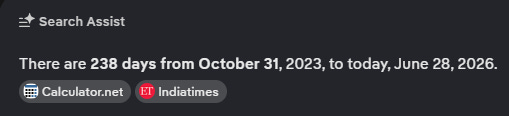
Newsflash - that’s wrong. Its actually 971 days. So maybe if your to do list includes counting days, AI isn’t coming for it. The shift though, is still real. Here’s what Anthropic is thinking > > “Anthropic recently told its growth team to hire more product managers, not fewer. The reason, as reported in industry coverage, was that Claude Code had quietly turned its engineering org into a team that ships at roughly three times its actual headcount, and the bottleneck moved from the integrated development environment (IDE) to the people deciding what to build. That detail is easy to miss in the noise of every AI productivity claim. It is also the structural shift the rest of the industry is now living through. The bottleneck in software is no longer typing. It is deciding what to type. And the engineers who treat that as someone else’s problem are about to plateau.” The point of my 2023 article and my clearly long-awaited point now, is that we need to decide how to continue to provide value to the org in ways that go beyond the pedestrian, mechanical activities of today.
AI Is Turning Knowledge Into A Commodity. Here’s What Matters Now: Full disclosure - I don’t subscribe to Forbes so I can’t se the whole article but I got as far as this quote > > “AI isn’t replacing human intelligence. It’s amplifying it. AI is great at speed, scale, efficiency, and information processing. But humans excel at judgment, creativity, relationships, communication, and meaning. The future won’t be won by AI. It won’t be won by humans resisting AI. It will be won by humans who know how to use AI to amplify their humanity.” > > Now I agree with that part but it is sorely lacking. Maybe the author goes on to address this later but here’s what leaps out at me - we have been living on luck in terms of getting the things the author cites as important. The failure here (and again maybe they get to it later) is in recognizing the scope of the chasm between building capacity in “judgment, creativity, relationships, communication, and meaning.” Did you take any courses in those in college? Grad school? Did you get asked questions during the interview process that sought to quantify how talented you were in those areas? Have you been assessed for those qualities in your annual performance review? Just saying those things are important and you should position yourself to show them off begs the question - show them off to who? How? Make no mistake, I fully believe we can and should educate, train, recruit, assess, and promote for those qualities BUT we will only be able to do it programmatically if we design changes for the entire ecosystem, otherwise, we’ll keep relying on luck.
I get what Claude Design offers for free, thanks to this open-source clone: I use Claude Design - think its amazing at rapid prototyping - do I think Open Design will replace it, no but it is a signal > > “Open Design is an open-source, local-first alternative to Claude Design. The tool has been published by the nexu-io team under the Apache-2.0 license, meaning the source is yours to read, fork, and self-host…The developers explained that the whole point was to take the agent-native loop Anthropic shipped with Claude Design and strip out the parts that locked you in…Open Design keeps the exact same loop and the same artifact-first approach, just without any of that.” > > The signal is the disambiguation of layers in the AI stack - we keep talking about orchestration mainly with regard to agents but we also need to think about layer orchestration and not just in a technical sense. Every new cook in this kitchen will bring additional contract and security complexity just to name two. Maybe we’ll build and agent to manage that. Another signal > > “Ex-Anthropic researchers raise $200M for self-improving AI.”
We’re Only Starting to Grasp the Pitfalls of Using A.I. at Work (gift link): File this under “No Kidding” - do you think we’ve got this tectonic shift in what, like 3 years? > > “In an experiment involving dozens of companies with A.I. employees, the researchers found that managers tended to vet documents less carefully when told an A.I. employee had produced them. The managers missed errors that other managers caught when told they were vetting the work of a human. Dr. Wiles speculated that managers didn’t think sussing out mistakes made by A.I. employees was their responsibility. If something went wrong, they could dismiss it as the fault of the tech team, or of the executives who wanted A.I. employees in the first place. “But it’s not your problem,” she said, channeling the managers’ mind-set about their own roles.” Thinking that accountability is another change vector in the OD+AI work that has to be done.
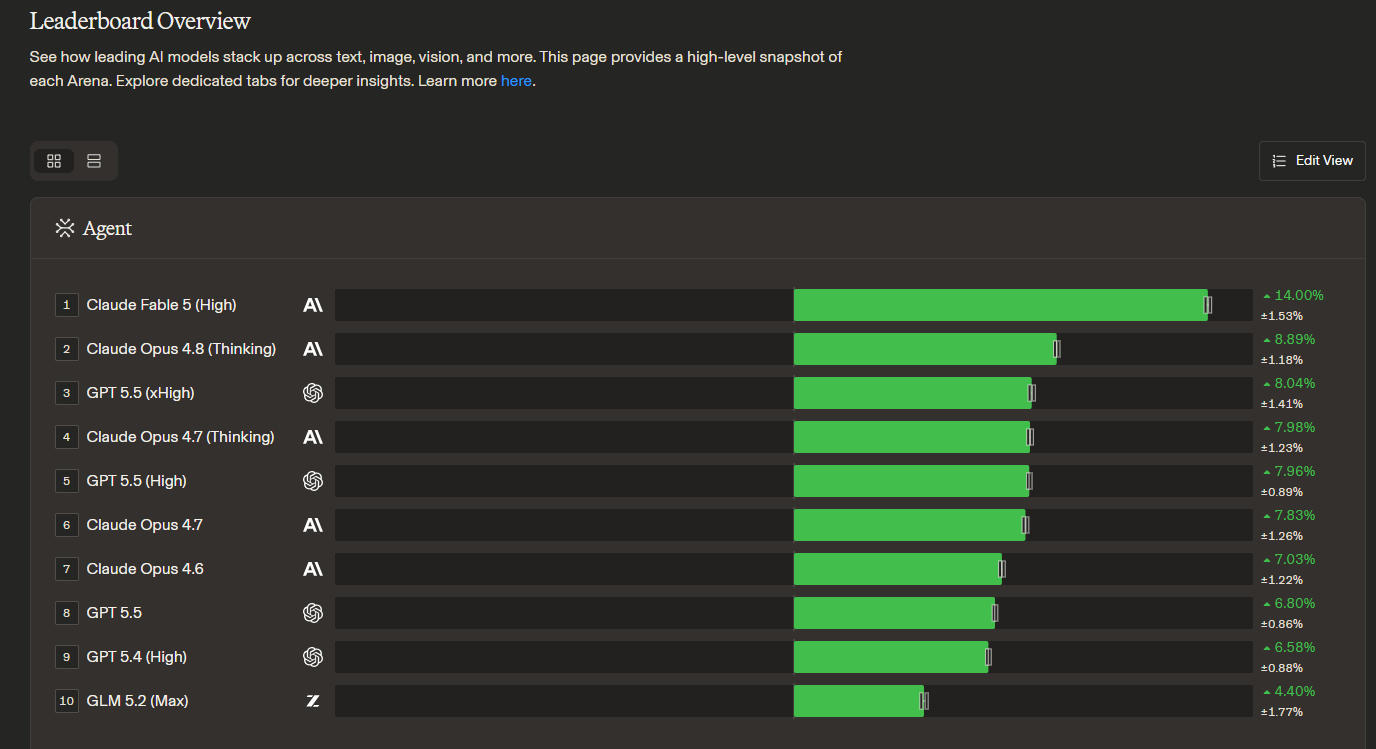
Arena’s AI Leaderboard: I wonder what the OD/change management version would look like? What metrics would you include?

How People in China Keep Outsmarting Anthropic’s Geolocation Restrictions: This just feel so very Gibson-esque > > “The cat-and-mouse game has fueled a thriving underground economy for Claude access in China. Accounts are sold on Chinese ecommerce platforms like Taobao and through illicit marketplaces on Telegram. More recently, a cottage industry of “transfer stations” has also emerged. These services act as intermediaries, purchasing access to Anthropic’s API outside China and then redistributing Claude API tokens to users inside the country. The set up is designed to give startups and other professional users more stable and reliable access to AI assistant.”
The Man Who Saw AI Coming - Erik Brynjolfsson wants to talk with you about the future: Great read but this part resonates - as an anthropologist and historian, I’ve seen example after after example of better tools helping build better tools faster. Now we come to the present > > “As an academic, he came to understand why. Technological advances are different from those in many other industries. They are combinatorial, digital, and exponential. An improvement in machine learning boosts the effects of an improvement in chip speeds. (Thus, it is combinatorial.) An improvement in machine learning spreads quickly at low or even zero cost. (Because it is digital.) An improvement in machine learning sets up additional improvements in machine learning, instead of making marginal improvements harder to eke out. (In other words, it is exponential.)”
Algorithmic Monocultures in Hiring: In case you missed this…its kinda horrible on a couple of fronts. It’s obviously horrible for the applicant. I know folks who are into the hundreds of applications and to learn that getting rejected by the algo for one role, negatively impacts the next role you apply for, at ANOTHER company, is a gut punch. On the company side, I can’t imagine all the talent that orgs are missing out on with the algo making those choices instead of humans > > “Over 90% of U.S. employers rely on hiring algorithms to screen job applicants. Many different employers use algorithms from the same few vendors. We conduct the largest empirical study of algorithmic hiring with data for 3.4 million real job applicants submitting 4 million applications to 156 employers across 11 market sectors.
1. Large-scale adverse impact for Asians and Blacks. We are the first to demonstrate adverse impact in deployed algorithmic hiring as one of the largest demonstrations of unfair outcomes in real high-stakes AI decisions. 25.87% of applications submitted by Black applicants and 14.74% of applications submitted by Asian applicants are directed to positions that adversely impact them based on the standards of the relevant U.S. employment law (Title VII).
2. Adverse impact only revealed by disaggregated position-by-position analysis. While empirical studies of algorithmic hiring are very constrained due to data access limitations, prior studies showed minimal adverse impact due studying all of the vendor’s data as a whole. By studying each position separately, in accordance with the standards of Title VII, we identify positions that demonstrate adverse impact that gets washed out in aggregate.
3. Algorithmic monocultures in hiring yield systemic rejections. We are the first to demonstrate systemic rejections in deployed algorithmic hiring as posited in prior theoretical research about algorithmic monoculture. The observed systemic rejection rate significantly exceeds that of the baseline of statistically independent decisions, even though the baseline accurately predicted observed systemic rejection rates in other hiring data in the absence of centralized algorithmic monocultures.
4. Data access inhibits independent research into hiring algorithms. We are the first and only group to independently conduct empirical research deployed hiring algorithms at scale, even though hiring algorithms mediate high-stakes decisions and are pervasively adopted. Given the data barriers, policy intervention may be necessary to enable scientific inquiry and increase accountability into this high-impact application of AI.”
The Strange History of Lorem Ipsum: How Cicero’s Words Became the World’s Favorite Placeholder Text: Be honest, you’ve always wondered haven’t you? “Pursuing an answer to that question in her new video above, Rabbit Hole creator Emily Zhang talks to individuals with relevant experience including Laura Perry, the former creative director at Aldus (a company named, incidentally, for the fifteenth-century Venetian printer Aldus Manutius). It was she who first made Lorem ipsum digital, having previously used it as a wholly analog graphic designer in the form of rub-off Letraset sheets. She manually entered it straight into PageMaker off one such sheet, making occasional typos along the way. That was just another phase of transformation Lorem ipsum had been undergoing since Cicero’s words were first borrowed — and chopped up, and mixed with fragments of other languages — to create what became the industry-standard dummy text.”
Introducing Claude Tag: Look, use it or not, this is another signal like SFDC’s Agentforce (really sounds like a follow up to Team America World Police) - as AI becomes more and more integrated into the daily flow of work, the more tension will be created with existing models of things like hiring, training, and pay. Darwin is rearing his head again- survival is and never has been, about the strongest but always about the most adaptable. Companies that are only pursuing AI deployments on efficiency grounds will quickly find themselves left behind by those orgs who actually look for new ways to work. See also: Anthropic launches Claude Tag, replacing its Slack app with a persistent AI teammate that learns, monitors and works autonomously.
Frustrated Microsoft Researcher Uses Goats in ‘Age of Empires II’ to Demo the Absurdity of LLMs: I love anything that successfully deflates almost any anthropomorphic attempts. Expressions like “the storm was raging” drive me batty - the storm doesn’t care, its just a storm. “Hallucinations” - when used regarding AI is also, at best, imprecise. It’s not hallucinating - its wrong. So, I, for one, am hear for the goats > > “This paper’s construction is meant to illustrate the illusion of anthropomorphic attributes in an LLM. If both an LLM and an AoE II-LLM present the same input/output behavior but do not present the same interface-related anthropomorphic attributes (e.g., latency or a textual interface), then we can note that a large part of these attributes are ascribed to them based on observer expectations.”
The Forward-Deployed Anthropologist: The idea of a “forward-deployed <insert relevant job title>” is really taking off. I like it, I think there is a lot of potential value there. This piece made me think though - without the appropriate research, we could get into a situation where we are just deploying bad decisions faster > > “By the end, I’d distilled my findings into twelve unmet needs, none of which a rep would have named in an interview. These were manual steps, or workarounds reps had built to get through the parts of the job the systems didn’t help with — things unlikely to come up in a survey or interview, but visible through observation with the right time and patience.” Also, any article that mentions Clifford Geertz, gets like 100 bonus points from me.
Beehiiv adds Cloudflare AI Crawl Control so writers can block or allow bots: Good fences make good neighbors, and if you don’t think fence building is an important signal, let me intro you to the history of barbed wire > > “Cloudflare Inc. and newsletter platform beehiiv Inc. today launched an integration that hands independent publishers a single toggle to decide whether artificial intelligence crawlers can reach their work. The integration bakes Cloudflare’s AI Crawl Control into the beehiiv dashboard. Writers face a choice. They can open their archives to AI search engines and agents and chase the distribution that brings, or shut AI scraping off and hold their content back for licensing deals later. Beehiiv is turning the option on for its users starting today.”
Enterprise software is about to get personal: Great article and another reiteration of the actual work that has to be done for AI deployments to work. I also love it for this passage along which is so incredibly spot on > > “There is a fight inside every major enterprise and it’s about control. On one side is IT and procurement, protecting hundreds of millions in commitments to last-generation platforms. On the other hand are business users who can’t wait for modernization.”