
Signals and Field Notes #18
Learning and Innovation Observed....Gratias vobis ago quod legitis


Just a note from me to readers of this newsletter. I love seeing how joyous Knicks fans were after winning the NBA championship. I love seeing the Carolina fans so happy after winning the Stanley Cup. I love seeing how out of this world joyous Cabo Verde fans were after drawing with Spain and Curacao after they scored on Germany and the Tartan Army after Scotland won (and Boston fell in love with them).
I think sometimes the best thing that sports can do is bring people together in a positive way. Now there are 324 of you subscribing to this little effort and its not close to a goal in the World Cup or a championship win but it makes me happy and I just wanted to hope you find joy in the world and thank you for reading. :-)
Is this the most 2026-AI headline so far? Love a shoe company becoming an AI company. huh?
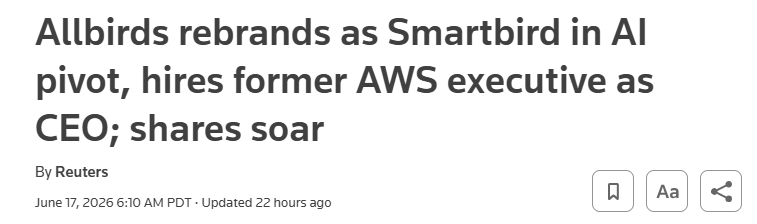
see also: The CEO of Allbirds’ new AI biz has a plan. Now she needs a “brand-new team” > > “Call it a startup with a sole founder and a very large seed round. What’s next is less clear.” > > I understand this pivot less and less.
AI Is Splitting the Job Market in Two, PwC Study Shows: Hmmm…so layoffs due to AI are short-sighted… “The companies seeing the greatest returns on AI are using it to amplify human expertise, accelerate innovation and create entirely new sources of value,” said Joe Atkinson, PwC’s global chief AI officer. “They’re pulling further ahead on productivity and growth than companies that focus primarily on automation.”
The ‘godfather of AI’ called xAI a failure and warned of a bubble. He’s also selling the alternative: I’ll keep saying it…if you’re not paying as much attention to the rapid evolution of AI-related business models and economics as you are to the technology, you’re walking blindfolded along the edge of a cliff. > > “LeCun’s bigger claim was about the whole industry. AI services are getting more expensive to run than the labs can charge for, he argued, and the gap is being papered over by investors. “The prices are going up… but the cost of running them is going down, but not nearly fast enough. And so all of those companies are losing money, and basically, the use for most people is funded by the investors. That can’t go on for very long,” he said. The labs, he added, “are going to have to increase prices, they’re going to have to cut costs, or there’s going to be a big bubble explosion.”
While Helsing and Anduril chase billion-dollar valuations, Comand AI raised €32M for the layer above them: Read the article or not but understand that this and the recent removal of Anthropic’s Fable model due to actions by the U.S. government, are both big signals of the development of sovereign models gaining velocity. Will be interesting to see how nationalism and sovereignty are represented in AI models.
The Thinkers Who Explain This Baffling Era: Philosophers are having a moment right now. I’m also a huge fan of thinking big in moments when a lot of things seem to be happening at once. We need frameworks for things that are larger than the things within them. “As Beckerman’s editor, I love the way he explains the news through the writings of philosophers, making an implicit case that they are less arcane—and more relevant—than some readers might think. So I decided to ask him to recommend a few more thinkers who might shed some light on the baffling era we’re living through.”
Anthropic ships major Claude Design overhaul with design system imports, code round-trips, and a fix for its token-burning problem: Claude Design is insanely good - now its better: “Two months later, Anthropic is shipping a substantially overhauled version of Claude Design that attempts to fix the consumption issue while simultaneously repositioning the product from a flashy demo into something far more strategically important: a design system compliance layer that connects to code, connects to the tools enterprises already use, and — critically — keeps everything on brand.”
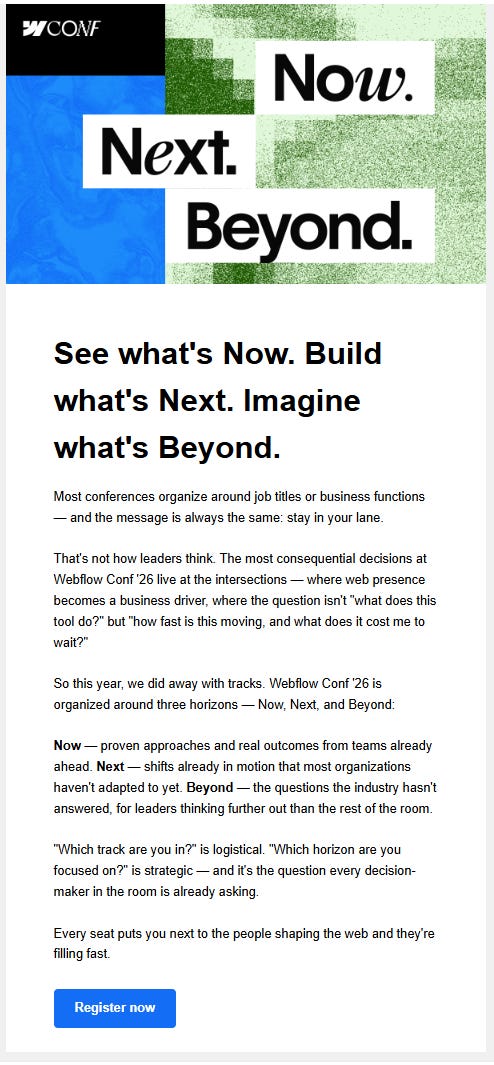
Wanted to shout out the fine folks at Webflow Conf '26 for some intriguing thinking. I think content tracks are useful at user conferences - tracks around product lines just make sense. Conferences that are larger in scope, like industry conferences, are places where I think those kind of tracks make less sense. Grouping sessions by time horizons is a nicely different tack. At a minimum, it gives people who work in the “Beyond” space a place to be - and I think now, that in real terms, the temporal gaps between these has essentially collapsed, this distinction is maybe even more important in that the “Next” and “Beyond” horizons will be here before you know it.
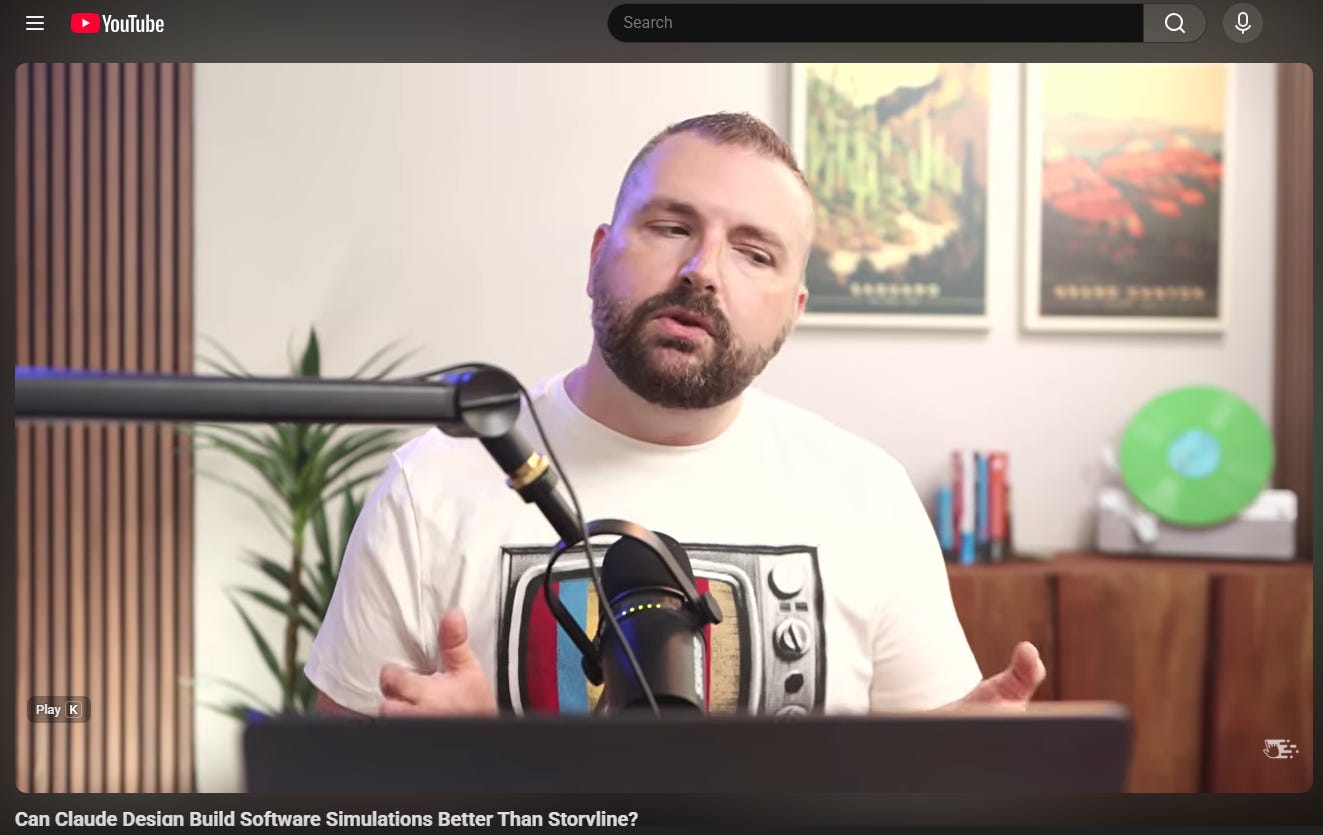
Tim Slade continues to kill it with these videos. These videos show the exact kinds of experiments that we need to be running on a variety of AI models. Try to do a concrete thing that we do now and see, not just if the new tool works or not, but if it does work, does it work better by w wide enough margin, to make switching to it logical? Its not the tool you’re building or the specific process you’re evaluating that’s the key - its the muscles you’re building on how to evaluate new tools in a moment that’s moving insanely fast. Well done!
You can’t build your AI future on broken foundations: So #1 this article is spot on - its not ground breaking but its a message that needs to be repeated multiple times. This is the message > > “Enterprise debt does not appear on a balance sheet. It accumulates quietly, in systems held together by tribal knowledge, in data no one fully trusts. Often, processes are so layered with workarounds that they have become the workflow. And with a workforce so used to the dysfunction, they no longer notice it.” Here (acording to the article and to my own observations are where this debt accumulates):
“1. Technology debt. Core systems are, on average, 10 years old. Developers spend most of their time keeping that infrastructure alive, not building what AI actually requires.
2. Data debt. Most functional data are not AI-ready. Teams spend their days reconciling, correcting, and preparing it. Work that produces no output crowds out the work that does.
3. Process debt. Half of all enterprise processes require manual intervention end-to-end. You cannot reliably automate what you have not reliably defined.
4. Talent debt. Organizations hire knowledge workers to think and decide. Broken systems ensure most of them spend their days doing neither.”
Thanks to Balkrishan Kalra for elegantly reinforcing this key message.

Designing the Dream House of an 87-Year-Old Tech Visionary: Look, you might not know who Stewart Brand is, but you should. I’m a historian and a geek so I’ve known Brand as a legend as far back as I can remember. There are names that all of us in tech should know, names like Doug Engelbart, Robert (Bob) Kahn, Alan Kay, Jerry Lawson, and of course, Stewart Brand. As a personal note, if anyone wondered what my dream office looks like - its in that picture. Brand is now 83 and approaching that age and his disease with the same thoughtfulness and DIY attitude that was dominant in the early days of personal computing and the Internet. I love this phrase about his new house > > “essentially an inhabitable prosthetic.” Read How Buildings Learn. Read about the Whole Earth Catalog and the WELL. The world will not be the same when Brand leaves it.
Seems fitting to include this along with Brand: “How to Be More Alive: Hermann Hesse on Wonder and the Proper Aim of Education.” > > “Our universities fail to guide us down the easiest paths to wisdom… Rather than teaching a sense of awe, they teach the very opposite: counting and measuring over delight, sobriety over enchantment, a rigid hold on scattered individual parts over an affinity for the unified and whole. These are not schools of wisdom, after all, but schools of knowledge, though they take for granted that which they cannot teach — the capacity for experience, the capacity for being moved, the Goethean sense of wonderment.” > > Go with wonder.
The AI layoff wave is becoming a powder keg: Some things can only be stretched so far > > “Something strange is happening in tech right now. Companies are posting record profits and revenue while laying off tens of thousands of people, citing AI as the official explanation. So far this year, there have been an estimated 363 layoffs at tech companies this year, affecting nearly 150,000 people — a pace of about 974 people per day, 44% faster than last year — according to TrueUp, a tech job board and recruiting platform that also runs one of the most widely cited tech layoff trackers.”
Who Owns the Code Claude Wrote? AI-generated code copyright explained for builders: I’ll keep saying it - the law, and the business models are evolving at the same pace as the tech. > > “Agentic coding tools like Claude Code, Cursor, and Codex generate code that may be uncopyrightable, owned by your employer, or contaminated by open source licenses you cannot see. Some of this is settled law, some is actively contested, and this piece is clear about which is which.”
Are Ed Tech’s Academic Benefits at Odds With Its Social-Emotional Downsides?: I’ll just file this under super-obvious facts > > “A high school fine arts teacher from Kentucky said in the survey that effective use of technology in school that addresses students’ well-being and academic development depends largely on the quality of how the tech is used, not just on the digital tool itself.” > > Here’s the thing that gets about surveys like this and about the question of say tech in higher ed, they rarely consider the context. Fire, when you are camping, and its freezing cold, is a very good thing. Fire, when you’re in a paper factory, is a bad thing. Context is key and when we refuse to consider how we might want to change the context to maximize the good of a new technology or to minimize the bad, then we are the ones who are failing, not the tech. To be sure, there are dark patterns and some of those do great harm regardless of context but when we fail to pull those apart from the tech that can be used for good, we preclude our own chance at getting rid of the dark.
Neuroscientists discover previously unknown cognitive benefits of reading physical books: As I post this, I want to acknowledge that in multiple ways, reading a physical book is a privilege that not everyone can access. People with low or no vision may or may not use Braille or may listen to audiobooks. People without access to a physical library may read on an e-reader. I’m sure there are others that I’m missing so I just want to recognize that.
I also know that I prefer physical books and I identify with a number of the points in the article. Different books have different feels and that’s a subtle clue that my conscious brain doesn’t have to pat attention to. I can feel when I’m near the end of a book. I can write in the margins (and much to the horror of many, often do). As a lifelong comic book reader, I love that this research was kicked off in this way > > “Kuniyoshi L. Sakai, a professor in the Department of Basic Science at the Graduate School of Arts and Sciences at the University of Tokyo, explains that the study originated from an industry question. “This research project began with an inquiry from COAMIX INC., one of the major publishers of Japanese manga, whether we could investigate any values of paper books scientifically,” Sakai said. “As a neuroscientist working on the human brain, especially on its language function, I decided to compare brain activation between paper and digital reading.” It makes me wonder how we could build digital experiences to map to the benefits of physical books?
What If Everyone Is Wrong About AI Adoption In The Workplace?: The ghost of Roy Amara and Amara’s Law (We tend to overestimate the impact of a new technology in the short run and underestimate its impact in the long run) bade me to include this article. “Younger workers and students express significantly more ambivalence. Research from Pew indicates that most people want more control over AI and are concerned about it’s impact on human relationships. Research from Junior Achievement shows that many young people worry about AI’s impact on creativity and job availability, with 57% believing that AI has negatively impacted their career outlook. Environmental concerns are also rising, particularly as awareness grows around the energy and water demands of AI data centers. These attitudes may influence long‑term demand in ways organizations are underestimating. Young people may be more likely to see AI as a career competitor and an environmental threat, than as a tool for improved productivity. A generation that values authenticity, sustainability and human connection may reward companies that use AI selectively, rather than those that automate aggressively at the expense of experience.”
Companies are profiling you from your smartphone use - how to stop them: Solid advice and actionable steps. See also: I blocked location permissions on every site but websites were still tracking me through 3 other signals I hadn’t considered.
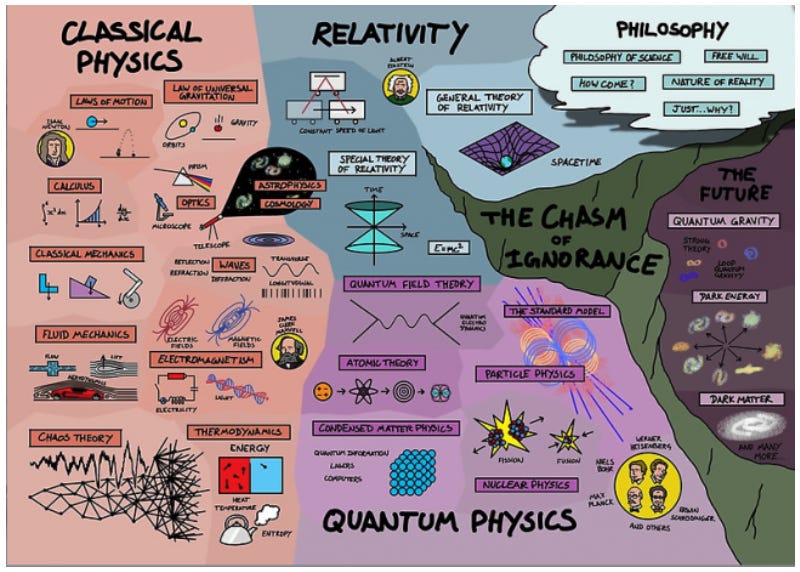
The Map of Physics: Animation Shows How All the Different Fields in Physics Fit Together: Who doesn’t love a good map!?

Go ahead and take this test. Its JUST as accurate as MBTI.