
Signals and Field Notes #17
Learning and Innovation Observed....Gratias vobis ago quod legitis

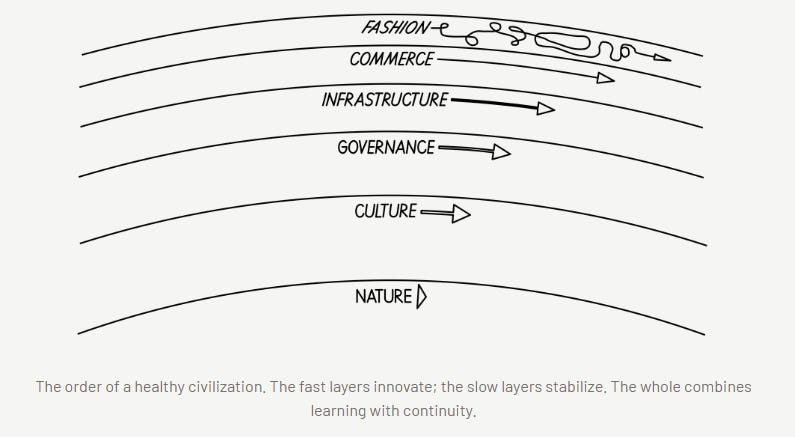
Pace Layering: How Complex Systems Learn and Keep Learning: This article is one of my favs and I think represents a reality that gets glossed over or just missed in most observations about the reality of how orgs exist. I’ve worked in L&D for a long time but when I came to Qualtrics and focused on customer education, my team was placed inside the Marketing org. If you ever want a lesson on how different teams within the same org move at different speeds, put an L&D team inside Marketing :-) This is not to say that any one speed is “right” but it should be a fact that you realize especially when working across teams.
There’s also a leadership lesson here. We tend to think about the most senior leadership having the most power - and in the short run, that’s right. On the other hand, if you’ve ever watched directives come down from on high and meet the slower moving reality, you get a picture of fast-moving power and slow-moving power. > > “From the fastest layers to the slowest layers in the system, the relationship can be described as follows: Fast learns, slow remembers. Fast proposes, slow disposes. Fast is discontinuous, slow is continuous. Fast and small instructs slow and big by accrued innovation and by occasional revolution. Slow and big controls small and fast by constraint and constancy. Fast gets all our attention, slow has all the power.” > > I think this is truer than ever in this AI era.
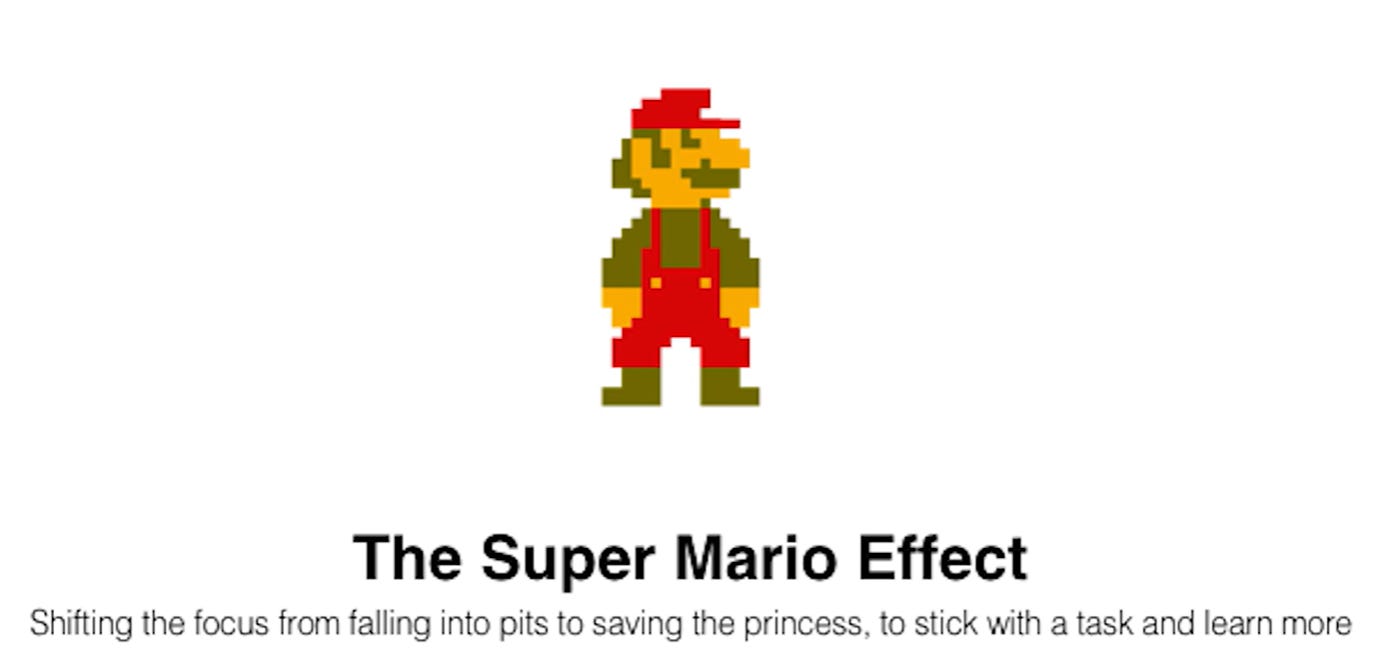
The Super Mario Effect - Tricking Your Brain into Learning More | Mark Rober | TEDxPenn: This is a fine video and Mark Rober is an engaging presenter (you should really watch his YouTube channel). I’m putting this here as another reminder or jolt to people to say that courses are not how humans have learned in the past. Nor are classrooms. Nor can we say that those features evolved because we had more and more complex topics to deal with. We had other systems - systems like apprentice or guild models that may have deployed courses and classrooms but in very different ways then we do now and we had whole other, much older mechanisms for instruction - things like songs, and stories, and games. So when we are confronted with having to speed up learning and we think that the answer is always to drive for shorter content (yay micro learning :-| ) maybe we should think of these older mechanisms and systems, Maybe what we need is longitudinal engagement with content - maybe instead of minutes we need weeks and months of engagement. Building contexts and scaffolding in ways that not only transmit content but also change behavior (anyone actually EVER had compliance training change their behavior?).
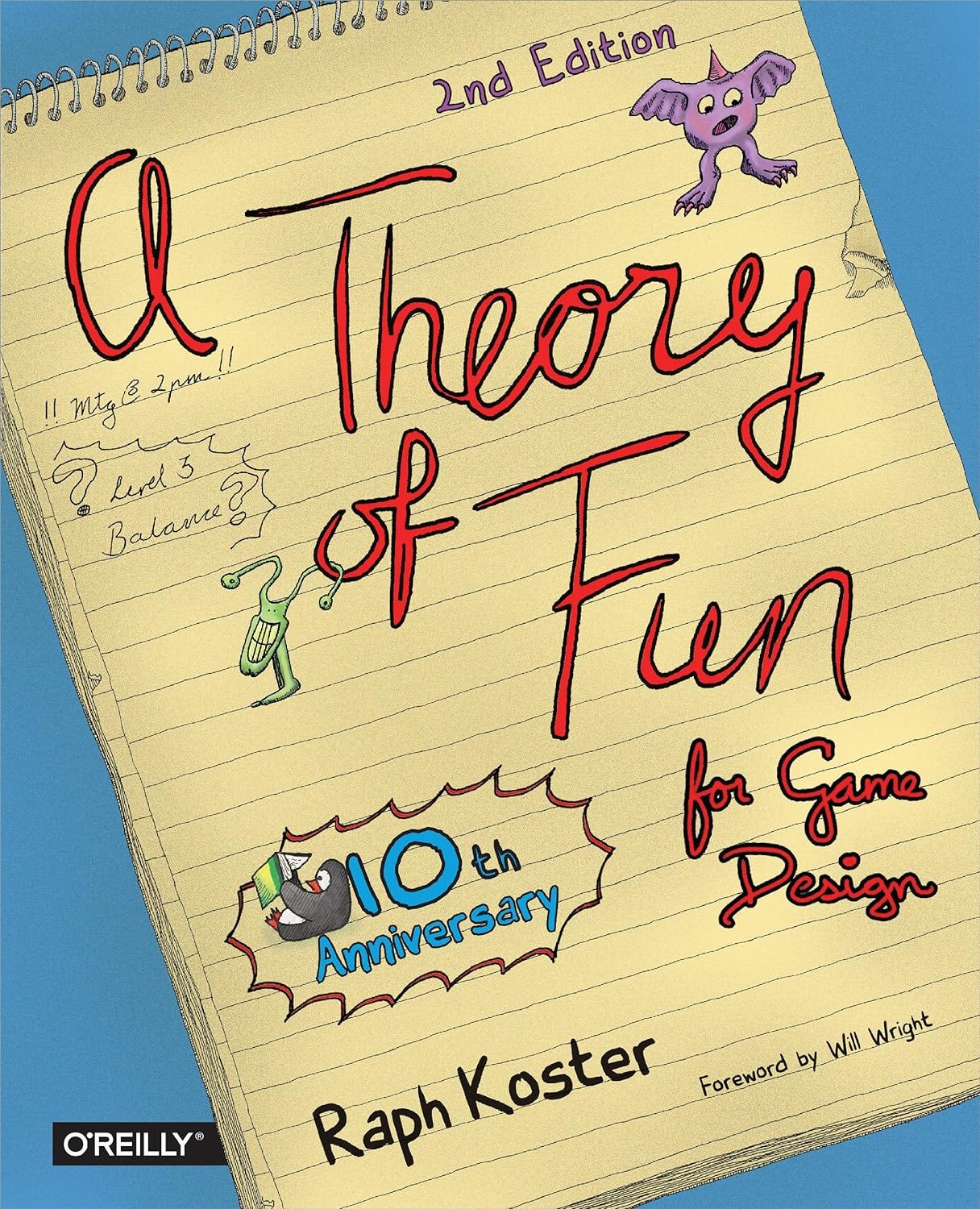
As good as Rober is, I think he misses an important point (maybe not misses but doesn’t land it as squarely as possible). Its a point that Raph Koster, game designer and world builder extraordinaire, makes incredibly well and simply in his seminal book, A Theory of Fun for Game Design. That is, the addictive quality of games is that they represent a content in which learning is the goal (and failure is expected but only as a learning mechanism). So watch the video, Read the book (its soooo good). And then lets think of ways we can change not how people learn, but how we seek to teach them. See also > > “Why your brain loves games — and how to use that to your advantage” See also x2 (almost like playing games is popular too): “Nearly 70% of Americans Play Video Games for at Least an Hour Each Week, New Report Finds.”
From Chaos to Cadence - A Practical Approach to Volatility: Read this first > > When the Horizons Collapse - Resistance, Crisis, and the Deep Attractors of Tomorrow for this perspective > > “For several decades, strategic thinking about systemic change has often been organised through the language of the Three Horizons…Implicit within this framework has always been an assumption about time. That temporal distance allowed societies to experiment, debate, and gradually metabolise the implications of structural change…Increasingly, however, that temporal spacing is collapsing…Structural shifts that once appeared as distant futures now intrude directly into contemporary decision-making…This compression does not simply mean that change is happening faster. Rather, it means that multiple layers of transformation are arriving within the same operative window…Under these conditions, the Three Horizons are no longer best understood as sequential stages through which societies gradually move. Instead, they describe three distinct strategic functions that must now operate simultaneously within the same historical landscape.”
Then read the article at the first link for this POV > > “If control is no longer reliably available at the scale we’re used to, what replaces it? One answer is rhythm – not as mood or aesthetics, but as a practical form of guidance: repeatable temporal patterns that keep responsibility intact under volatility. Rhythm becomes guidance when it stabilises the capacity to choose like in bodies, organisations, and ecosystems.” Both these articles and these perspectives offer actionable insights into how we should think about our systems in a world with collapsed horizons. Remember, it was never the strongest that survive but the most adaptable.
The BBC Archive YouTube channel is the stuff nostalgia dreams are made of: I love this. I love reminders that we’ve always got things wrong when it comes to technology predictions.
AI@Work: Redesign first. Then AI just works: So yes, I’m posting this to disagree with it because I think this piece has a dangerous idea in it that I actually think is likely to play out. Look at the image below:
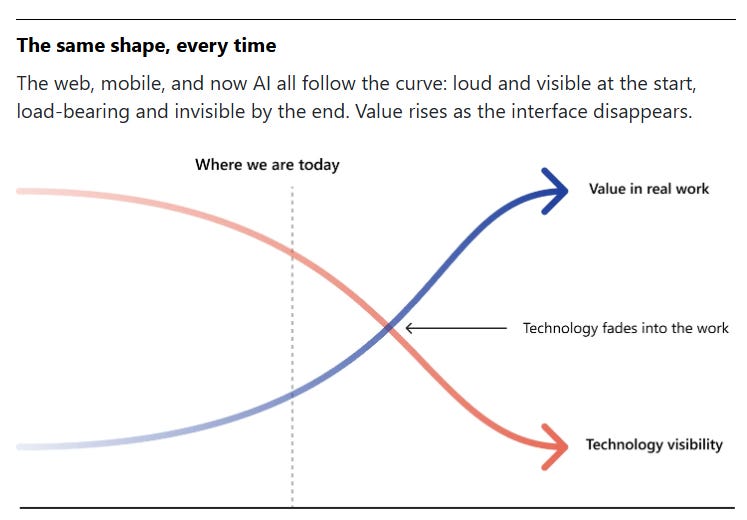
Here’s my issue - I’m not arguing with how this dynamic has played out in the past. My argument is that “AI” is different. It’s so different that as much as I believe we’re failing to re-organize work to make the best use of it, I also believe (and fear) that we won’t do the work we need to do BEFORE it disappears into the background to put guardrails around it. There is damage when a car crashes into your living room and there is damage when the foundation is eaten out from under your house. In the first instance, you can see the damage, correctly assess the cause of the damage and fix it. The second example causes damage that is hidden, hard to diagnose, hard to fix, and might not show up until your whole house is ready to fall apart. I’m not anti-AI in this instance but I am against the stance that we should be in some kind of rush to have it disappear in a way that makes us lose visibility over what its doing. See also > > “RSI is the new AGI — and it’s just as hard to pin down.” Want that kind of dynamic to just become invisible. Or this, you want this invisible? “Anthropic’s browser agent got hijacked 31.5% of the time before safeguards engaged.”
Here’s why change is so exhausting, according to neuroscience: I think sometimes its good for us to remember that our “orgs” and “teams” are actually made up of humans who actually have human reactions. Shocking right? “Looking at the neuroscience of what’s happening in the mind and body offers an explanation strategy decks rarely acknowledge: chronic change is not just organisationally challenging, it is physiologically draining—and for many, it’s tipping them into nervous system states where genuine engagement with transformation becomes neurologically difficult.” Want to talk about change management? Tell me you understand points like this > > “Change readiness isn’t a fixed trait—it’s a function of nervous system state. Someone in hyperarousal can’t access the curiosity or flexibility needed to learn. They are, quite literally, neurologically unavailable. Organisations mistaking this for individual failure, rather than the result of prolonged, under-recovered transformation, will keep trying to motivate people who are too depleted to engage.” I’ve seen this time and again. Change readiness is a finite but renewable capacity. You can not keep piling change on top of change and expect that capacity not to be depleted.
So you’ve heard these AI terms and nodded along; let’s fix that: Nice vocab review. See also > > “5 Fun Papers That Explain LLMs Clearly.”
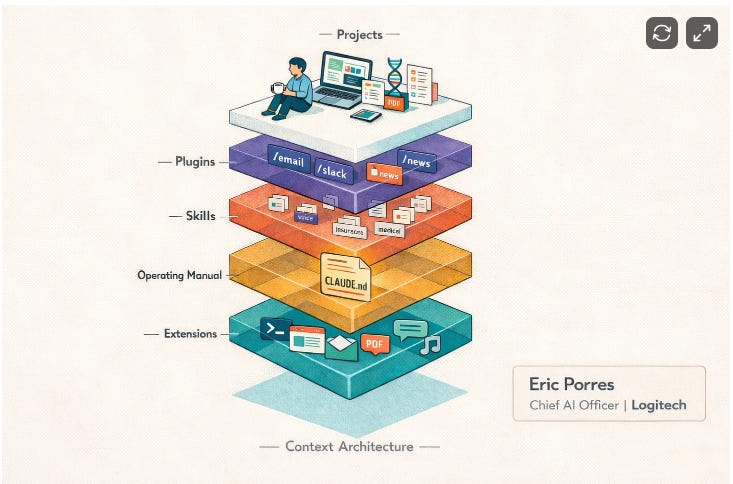
Claude Cowork Might Be the Most Consequential Piece of Software You’re Not Using: I’m working toward this but I’m not there yet. “TL;DR: Claude Cowork is Anthropic’s desktop agent — a sandboxed VM on your computer that can read your files, run code, control your browser, send messages, and talk to external services. Most people open it, ask a question, and close it. That’s the vending machine approach, and it wastes 90% of the surface area.”
Gemini Spark is the most impressive and terrifying AI experience I’ve had yet - It’s a remarkable piece of technology. But the future sure is creepy and Gemini Spark is now rolling out and it hopes you will trust an AI more than apps: Both popped up in my feed at the same time. “According to Google, Gemini Spark can operate autonomously across your digital ecosystem, handling tasks even when your phone or laptop is turned off. Users can either watch it work in real time or let it run quietly in the background. Importantly, Google says the system remains under user control and is designed to seek approval before taking significant actions.” To me, that’s feeling a lot like Claude in Chrome and I agree with the sentiment of the first headline - this could be great and creepy. I don’t think AI companies in general, have done enough to win the trust of the general public to the degree that people are goign to be OK with with an agent operating in a way that’s indistinguishable from them online. They say there will be guardrails and that it will ask before taking actions but who watches the watchmen? How will I know the foundation under my house isn’t being eaten away? This might help > > “New Microsoft tool lets devs spin up AI behavior tests using text descriptions.”
AI costs how much? GitHub Copilot users react to new usage-based pricing system: Told ya so > > “Across social media and forums, many Copilot users are sharing personal statistics showing how just a few hours of AI usage can now account for a large chunk of their new monthly subscription caps. For some users, it reportedly took less than a day to use up a month’s usage quota.”
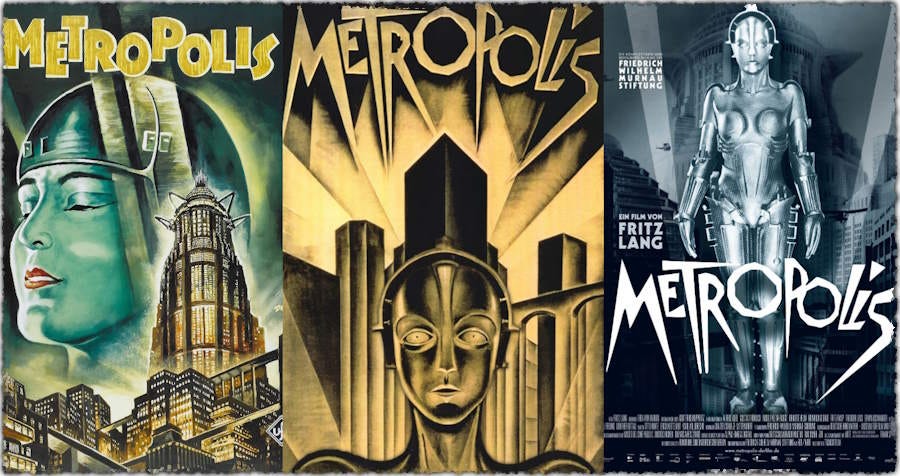
How Fritz Lang’s Metropolis Created the Blueprint for Modern Science Fiction (1927):
“A vast, miserable proletariat squanders its days in meaningless toil. Society is under the control of ultra-wealthy business magnates. In order to pacify the underclass, the ruling class pins its hopes on a technological solution: artificial intelligence. Welcome to the year 2026, as envisioned in Fritz Lang’s Metropolis. The new short documentary from DW above examines the making and legacy of Metropolis, paying special attention to its considerable influence on much of the science-fiction and dystopian cinema since. 2001: A Space Odyssey, Star Wars, Blade Runner, Terminator 2, Madonna’s “Express Yourself” video: these are just a few of the productions that take no great pains to hide — and in some cases, even emphasize — their debt to Lang’s vision.”